RITUAL
A way of remembering
There are things we understand through words.
And there are things we understand by living them.
Ritual has always been part of SVARA.
Not as something separate from the training, and not as decoration around the work, but as another way of experiencing, learning and remembering.
We work with breath, the nervous system and the body. And we work with fire, water, earth, food, movement, music, creativity and the natural world around us.
A ritual brings our attention to what we are doing.
It can mark a beginning or an ending. It can help us acknowledge a transition, give something back, express gratitude, make an intention visible or simply become more present with an experience.
For us, ritual is also part of remembrance.
A way of slowing down enough to remember our relationship with our bodies, with one another and with the natural world we are part of.
It does not require a particular belief.
It asks us to participate.
EARTH
To be held. To belong. To receive. To give back.
Earth brings us into relationship with what supports us.
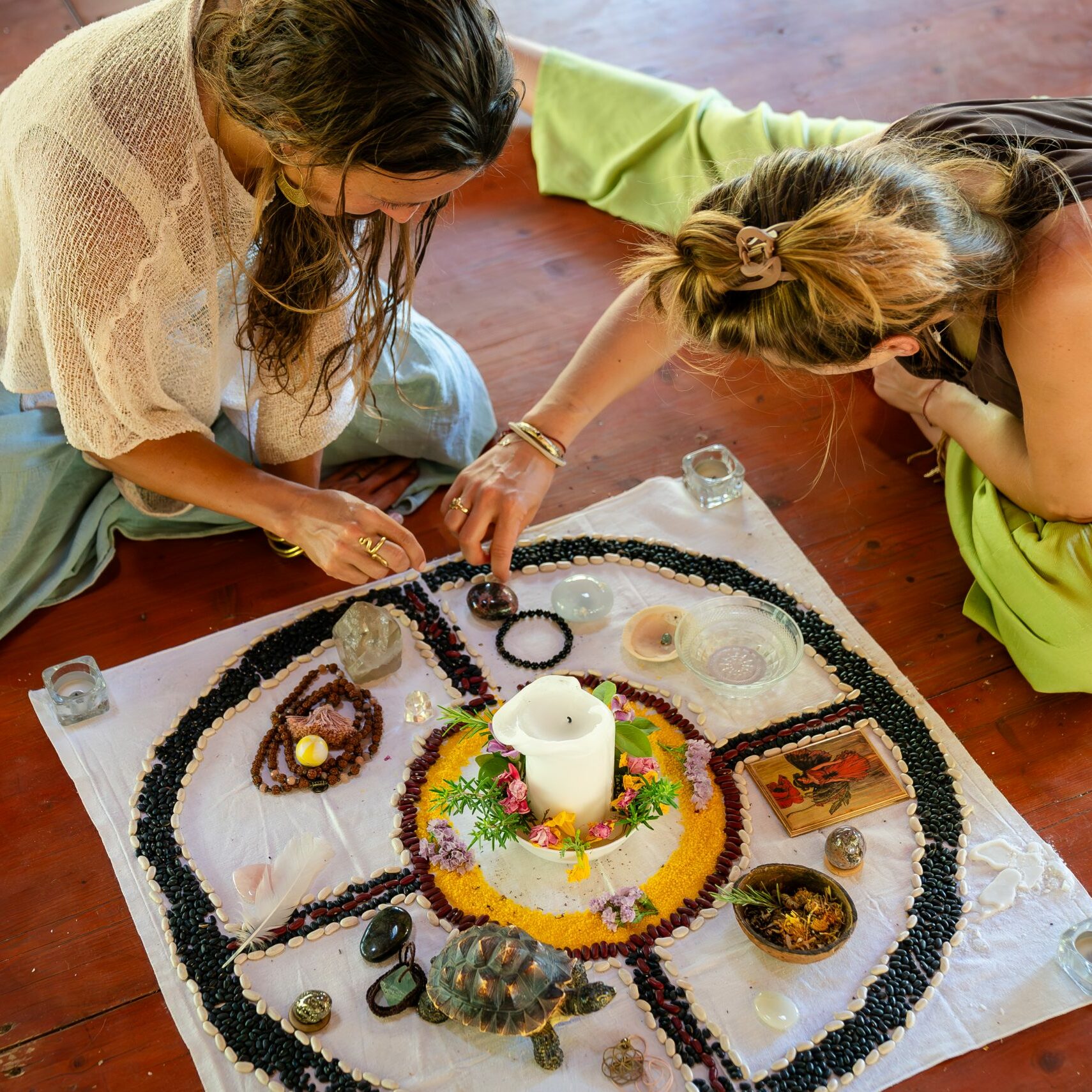
Throughout our trainings, we spend time outside, work with plants and natural materials, create altars and offerings, and bring our attention back to the ground beneath us.
Earth reminds us that we are not separate from the world around us. That we are constantly receiving: support, nourishment, shelter, life.
Our rituals invite us to notice this relationship. To receive with awareness, to express gratitude, and to remember that giving back can be part of receiving.
Sometimes this is as simple as placing an offering on the Earth.
A small gesture of remembering that the relationship goes both ways.
WATER
To feel. To move. To soften.
Water asks for a different kind of relationship.
We can move with it, resist it, surrender our weight to it, be held by it.
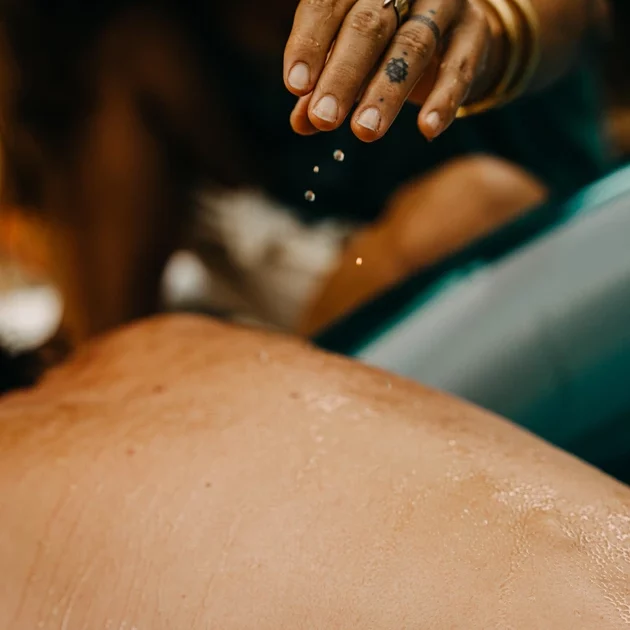
Water has been part of SVARA through warm water breathwork, plant baths, practices in and around water and offerings to the ocean.
Working with water invites us to experience rather than control.
To notice what changes when the body is supported differently. To feel movement, flow and resistance. To allow ourselves to receive.
And at the end, to give something back to the waters that have held us.
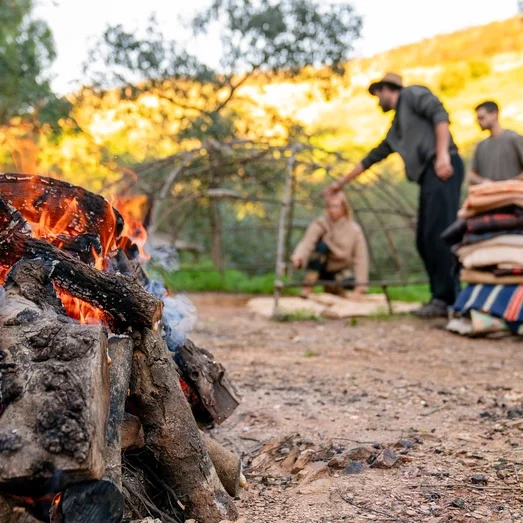
FIRE
To transform. To illuminate. To mark a transition.
Fire has a strong place within SVARA.
We gather around it. We cook with it. We sit beside it. We bring things to it.
In the Fire Purification practice, fire becomes part of a conscious process of reflection and transition. Not because fire magically removes something from us, but because the ritual gives us a physical act through which we can meet an intention.
What am I carrying?
What am I ready to put down?
What do I want to honour before I move forward?
Fire is also present in our sweat lodge ceremony, where heat, darkness, sound, breath, community and the elements come together in a very different kind of experience.
These practices invite us into contact with ourselves, with our limits and with the way we meet intensity.
AIR
To breathe. To make space. To listen.
Air brings us back to the foundation of SVARA: the breath.
Breathing is something we do from the moment we arrive in this life until the moment we leave it. Most of the time it happens without our attention.
And then we stop and listen.
The breath becomes a meeting place between what happens automatically and what we can consciously influence. Between the inner world and the world around us.
In SVARA, breathwork is not only a technique.
The breath itself can become a ritual.
A time to listen. To feel. To meet ourselves. To notice what is present without immediately needing to change it.
And perhaps this is one of the simplest rituals we have.
To stop. And breathe.
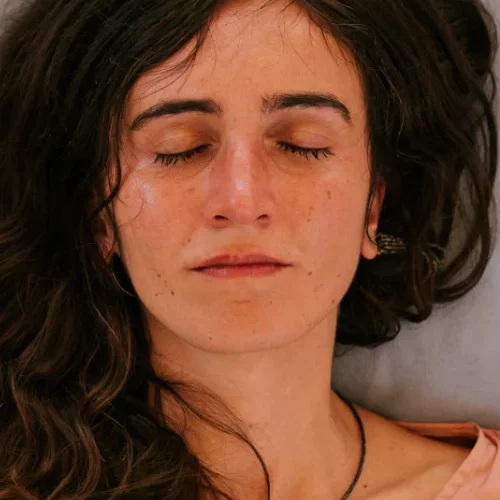
RITUAL IS A LIVING PRACTICE
Ritual at SVARA is not something we perform because it looks beautiful.
It is a way of bringing our full attention to an experience.
Sometimes this happens through fire or water. Sometimes through movement, music, touch, breath or silence. We create with our hands, work with plants and natural materials, dance, sing, make offerings and gather around what has been created together.
There is space for beauty and creativity here. For play. For expression. For doing something without needing to explain exactly what it means.
And at the same time, the way we hold these experiences is deeply informed by our understanding of the nervous system.
We don't use ritual to push people towards an emotional experience. We don't believe intensity makes something more meaningful. We pay attention to choice, capacity, consent and the different ways people respond.
A ritual can be powerful and still be gentle.
It can be carefully held without being controlled.
It can invite something without demanding an outcome.
For us, this is also part of learning how to work with people.
Not simply learning another ceremony to repeat, but developing the sensitivity to understand what we are creating, why we are creating it and how to leave enough space for each person to have their own experience.
The ritual serves the person.
The person does not have to perform for the ritual.
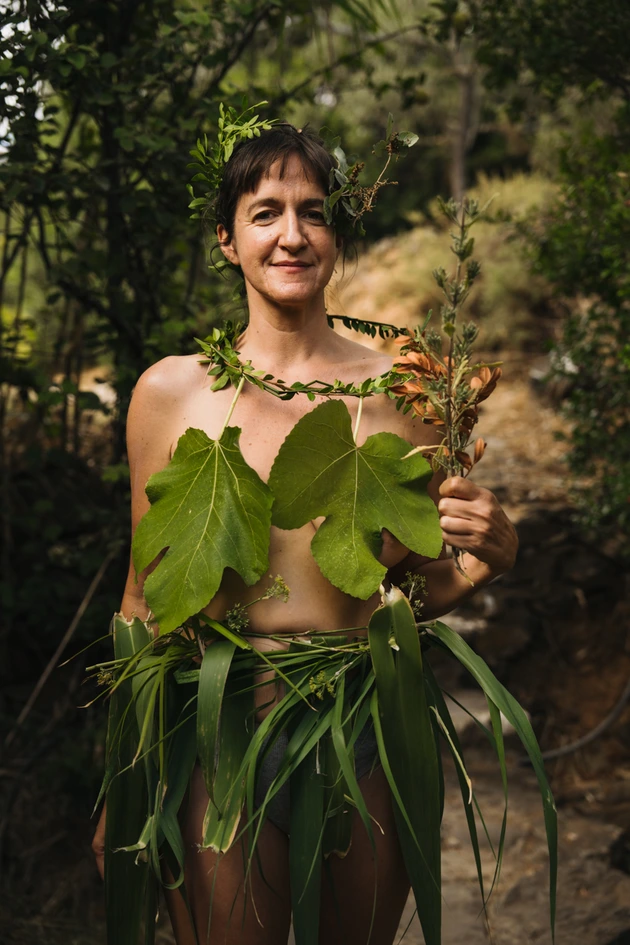

RITUAL IN THE ORDINARY
Ritual does not only live in ceremonies or extraordinary moments.
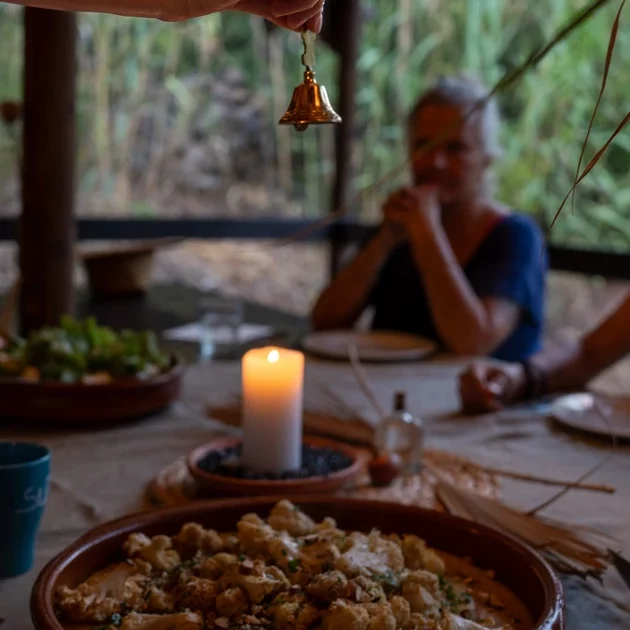
It can be in the way a meal is prepared. In the bell that calls us to the table. In pausing together before we eat. In giving thanks for what nourishes us and remembering where it came from.
During a SVARA training, the kitchen is part of the experience. Food is prepared with care and intention. We gather around the table, we eat together, and we take time to receive what has been made for us.
Because ritual is not necessarily about making a moment more sacred.
Sometimes it is simply about recognising what is already sacred in the ordinary.
And perhaps this is what remembrance means to us:
coming back into relationship with our body, our breath, each other and the living world around us.